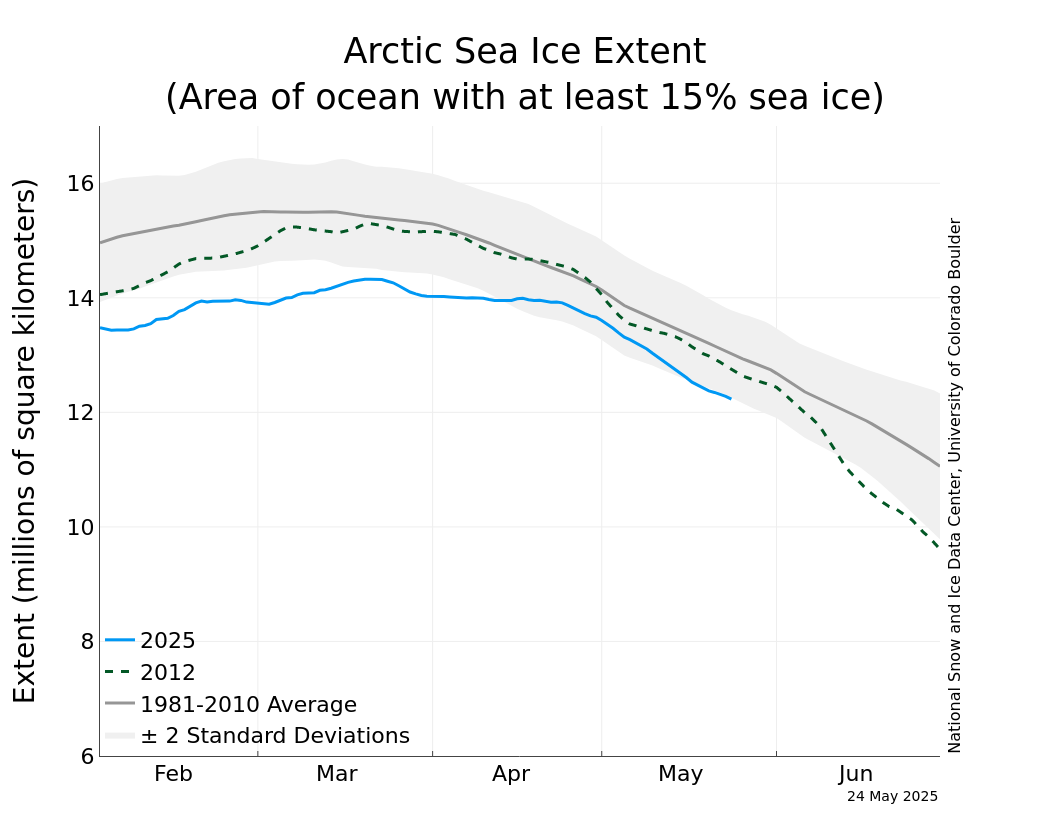
Big report on no arctic sea ice on Newsnight last night. Really good piece featuring an interview with Prof Peter Wadhams -- and me hopping around on an iceberg.
http://www.bbc.co.uk/news/science-environment-19496674
http://www.bbc.co.uk/programmes/b01mmx7q (from 35:30)
The report was followed by a discussion with a badly misinformed (and rather agressive) conservative MP. He kept (somewhat hilariously) referring to the IPCC report as reliably scientific in contrast to the 'alarmist' views held by PW.
Somebody should have told him that PW was one of the authors on the IPCC...
06/09/2012

12/08/2012
Fast Forward (The End (again (for now)))
I do apologize for the rapid decrease in online activity over the last 2 weeks. There was a number of factors that contributed to my premature blogging-demise - the main one was definitely the lack of internet over the last week on the MV Neptune. We then had a horrendous journey back home, with what's probably the worst flight time to waiting time ratio ever (6h:21h), and it took me a good few days to settle back in.
And then I also didn't want to take all the excitement away from Operation Iceberg (I also had the impression that the makers of the show would appreciate if I didn't shout out all our incredible adventures into the bloggosphere before they've shown their film).
But if you're really keen to know how the story went on (and don't want to wait until mid-September when the show is aired on BBC 2), then I'd be very excited to receive your emails, or give me a call (my details can be found on my website, click here) - or leave a comment and I promise I'll answer any questions in full detail.
One thing that I will give away though is that we managed to record (for the first time) the breakup of an iceberg. I think that's pretty cool.
Thanks for all your help and support and messages. I'll post some more photos and the time and date of the airing of the show asap.
See you all (be)for the next trip!
Till
And then I also didn't want to take all the excitement away from Operation Iceberg (I also had the impression that the makers of the show would appreciate if I didn't shout out all our incredible adventures into the bloggosphere before they've shown their film).
But if you're really keen to know how the story went on (and don't want to wait until mid-September when the show is aired on BBC 2), then I'd be very excited to receive your emails, or give me a call (my details can be found on my website, click here) - or leave a comment and I promise I'll answer any questions in full detail.
One thing that I will give away though is that we managed to record (for the first time) the breakup of an iceberg. I think that's pretty cool.
Thanks for all your help and support and messages. I'll post some more photos and the time and date of the airing of the show asap.
See you all (be)for the next trip!
Till
30/07/2012

25/07/2012
Iceberg ahead! And yet again: Bears
I have seen large tabular icebergs before, but this morning's sight was spectacular. The berg emerged from the fog, towering over the ship, extending beyond the horizons - and anxious excitement spread instantly around deck. It is clear that most people desperately just want to get onto the ice. At the same time the signs of advanced decay of the berg are hard to miss - it is surrounded by ice ranging from slush to grand pianos to several football fields in size, all pieces that have recently broken off its edge - and it is simply impossible to tell which part will go next. There are waterfalls of meltwater thundering down its face, a face that rises up to 20m at points. Who would voluntarily want to spend a night on an island that is literally rotting beneath your feet? (i do, oh yeah!)
Oh yes! and I was the first one to touch the iceberg with my fingertips when the captain put the bow of the ship briefly against the berg's face.
And then even the most experienced polar explorers* were proven wrong - not just a little, but altogether wrong: they had pretty confidently announced that there would be no bears around the berg - or maybe a lost lonely one somewhere. By early afternoon we had seen 8! - sleeping on the berg edge, bathing in the water, strolling alongside us. Small bears, big bears - bears everywhere!
It really looks like this slab of ice might make for some pretty exciting TV.
We're planning on going ashore tomorrow morning** - and the anxious excitement on the ship is greater than at the start of the day.
*We have some of the most experienced polar scientists and travellers in the world on board: Doug Allan (look him up!) has spent over 8 years in Antarctica and won lots of BAFTAs and Emmys for his films. Peter Wadhams is on his 44th Arctic Cruise (or thereabouts), etc.
**By 'we' I mean the extreme climber and diver Andy Torbent with his team - to secure a safe landing site.
Oh yes! and I was the first one to touch the iceberg with my fingertips when the captain put the bow of the ship briefly against the berg's face.
And then even the most experienced polar explorers* were proven wrong - not just a little, but altogether wrong: they had pretty confidently announced that there would be no bears around the berg - or maybe a lost lonely one somewhere. By early afternoon we had seen 8! - sleeping on the berg edge, bathing in the water, strolling alongside us. Small bears, big bears - bears everywhere!
It really looks like this slab of ice might make for some pretty exciting TV.
We're planning on going ashore tomorrow morning** - and the anxious excitement on the ship is greater than at the start of the day.
*We have some of the most experienced polar scientists and travellers in the world on board: Doug Allan (look him up!) has spent over 8 years in Antarctica and won lots of BAFTAs and Emmys for his films. Peter Wadhams is on his 44th Arctic Cruise (or thereabouts), etc.
**By 'we' I mean the extreme climber and diver Andy Torbent with his team - to secure a safe landing site.
24/07/2012
Canada!
Just a brief one today since I've been working for 17 hours and also because we're going to hit the iceberg (hopefully not literally) tomorrow at 5 am. And since it's all for telly everyone has already gone to bed because they'd like to look nice and rosy on camera when the berg first appears on the horizon. So, set sail last night at 00.01 (because the captain thinks it's bad luck to leave on a monday), heading straight west from Ilulisat, across Baffin Bay and will reach Baffin Island in the early morning - that's where the berg is grounded.
For the next 10 days Prof Peter and I want to measure how the iceberg responds the waves that hit it - how it bends, stretches, compresses and eventually breaks up. For that we have
a) a waverider buoy that measures the swell and waves that are coming in
b) super high-resolution GPS sensors that will measure how the iceberg moves and stretches
c) a set of tiltmeters that will record how it mends.
There's 3 other teams of scientist (7 of us in total). The others do
1) sonar and laser scanning of the edge of the berg (Richard Bates, St. Andrews)
2) drilling and coring of the berg (Keith Nicholls, BAS)
3) seismic measurements and water properties (Alon Stern, NYU)
The BBC are shooting a 2 times 1 hour documentary (to be aired on BBC 2 on Sept 9 and Sept 16, 9pm) about the life cycle of an iceberg. They filmed the birth on a glacier the last 3 weeks in Greenland, and now with us they want to document its death, off the Canadian coast for 2 weeks. The show is centered around 2 presenters: Chris Packham and Helen Czerski. There's also medicine man Chris van Tulleken and extreme diver and climber Andy Torbent. As mentioned previously, there's a BBC website (link above) with lots of images and videos (mainly of the first half so far). But I'll obviously try and give you my version of the story.
But now off to bed, all my instruments seem to be working and I need to look nice and rosy tomorrow.
For the next 10 days Prof Peter and I want to measure how the iceberg responds the waves that hit it - how it bends, stretches, compresses and eventually breaks up. For that we have
a) a waverider buoy that measures the swell and waves that are coming in
b) super high-resolution GPS sensors that will measure how the iceberg moves and stretches
c) a set of tiltmeters that will record how it mends.
There's 3 other teams of scientist (7 of us in total). The others do
1) sonar and laser scanning of the edge of the berg (Richard Bates, St. Andrews)
2) drilling and coring of the berg (Keith Nicholls, BAS)
3) seismic measurements and water properties (Alon Stern, NYU)
The BBC are shooting a 2 times 1 hour documentary (to be aired on BBC 2 on Sept 9 and Sept 16, 9pm) about the life cycle of an iceberg. They filmed the birth on a glacier the last 3 weeks in Greenland, and now with us they want to document its death, off the Canadian coast for 2 weeks. The show is centered around 2 presenters: Chris Packham and Helen Czerski. There's also medicine man Chris van Tulleken and extreme diver and climber Andy Torbent. As mentioned previously, there's a BBC website (link above) with lots of images and videos (mainly of the first half so far). But I'll obviously try and give you my version of the story.
But now off to bed, all my instruments seem to be working and I need to look nice and rosy tomorrow.
23/07/2012
Operation Iceberg
After an eventful trip to Fram Strait, Peter and I had a quick refreshing stopover in civilisation (one night in copenhagen). This morning we flew to Ilulisat (formerly Jakobshavn) in West Greenland to join the BBC Science team for the documentary Operation Iceberg (there's a link to the Op Iceberg homepage above). The ship this time is the Islandic MV Neptune and it is (in all honesty) not the Arctic Sunrise - I just miss all the funky hippie drawings and decorations. I'm sharing a cabin with Prof Peter and Keith Nicholls and Povl Abrahamsen of BAS, so it'll be cosy. We'll leave port this evening and will transit to the other side of Baffin Bay where we want to survey a huge (possibly grounded) iceberg (3 times the size of Manhatten) for the next 2 weeks. Oh yes - Ilulisat is fantastic, it's a small harbour town and there is thousands and thousands of small and large icebergs around. I hope that we'll have fairly steady internet on the ship so I'll soon write more about what the plan is and who is involved and why bother.

Subscribe to:
Posts (Atom)